Union Trembles: Nullification Crisis
Riding his rising political stardom, Henry Clay ran for President in 1824. Despite being a popular national figure, he couldn’t match the national popularity of Andrew Jackson and regional popularity of John Quincy Adams in New England. Clay’s platform was ideologically closest to that of Adams and thus he decided to align with him when the election was being decided in The House of Representatives. It is widely known that engaging in the “corrupt bargain” hurt his national image severely and permanently.
Even though the Constitution gave Congress explicit powers to set the outcome of the election, it would have been prudent of Henry Clay to consider the optics of going against the outcome of the popular vote. Jacksonian Democrats cast him as a manipulator, and that image pursued him for the rest of his career. Despite that, you can’t blame the Kentucky Congressman for the lack of trying. He ran in the general election for President two more times. In 1832, he challenged Andrew Jackson, the man he bitterly disliked. He ran as a candidate from the National Republican Party, a party that was formed by the Adams-Clay wing of the Democratic-Republican Party created in opposition to Jacksonian Democrats. It was the first meaningful opposition party since the Era of Good Feelings. Henry Clay ended up with 37.4% of the popular vote and carried six states. That wasn’t a very good performance. It was partially because the vote that opposed Jackson was split between Clay’s National Republicans and the Anti-Masonic party, another anti-Jacksonian party, a more radical one, that did not want to cooperate with Clay. After the election, Henry Clay and other members of National Republican and Anti-Masonic parties formed the new Whig Party. Candidates from this party would have much better luck in future elections.
“The American System” and Tariff Wars
For a moment, let’s go back a decade and a half. As the War of 1812 came to an end, tensions between British and American manufacturers remained. In an effort to capture the American market, the British flooded it with cheap high-quality goods. In response to that, in 1816 U.S. Congress introduced protective tariffs to keep American goods competitive. Henry Clay played an instrumental part in the passage of these tariffs by coming up with “the American System” – a vision that rested on three coordinated policies: protective tariffs, a strong national bank, and investment in infrastructure. The American System became a cornerstone of U.S. domestic policy for the next two decades. In many ways, it co-opted old Federalist policies championed by Alexander Hamilton, which laid the foundation to the future strength of the U.S. economy. The American System, in its turn, reignited it by continuing similar policies. In 1816, The Second Bank of the United States was chartered. After a few years of its existence, it managed to bring sanity to monetary policy by strictly regulating state banks, reducing inflation, and enforcing financial discipline throughout the states and their own central banks. Northern industries benefitted from tariffs levied on foreign goods like iron, wool, and textiles because it protected the very same goods it manufactured from cheap foreign competition. On the contrary, while the agrarian South was exporting raw cotton to Great Britain, it was also importing finished textiles and woolen products from abroad. Those imports became a lot more expensive because of the Tariff of 1824. While southern states were generally supportive of the 1816 tariff, they came to really hate the 1824 Tariff as it adversely affected their economies.
As if that wasn’t enough, then came the Tariff of 1828. It was levied on mostly the same goods as its 1824 counterpart except the rates were much higher, up to 38 percent on imported goods and 45 percent on imported raw materials. In fact, that tariff wasn’t even supposed to pass the vote in Congress. Jacksonian Democrats crafted a bill so extreme in nature that they were near certain that it wouldn’t pass. According to their plan, southerners would uniformly oppose it, but due to Jackson’s great popularity in the South, they would vote for him in the election anyway. At the same time, northerners would not support it enough for the bill to pass, but it would shore up support for Andrew Jackson in northern states in the presidential election year. To everyone’s surprise, the bill was passed and signed into law. It helped Jackson’s cause, but predictably it ended up harming the southern economy even more.
Jackson won the election, but contrary to southerners’ expectations, he did exactly nothing about lowering the tariffs. His attention was devoted to the Bank War instead, which resonated enough with his southern base to propel him to an easy re-election in 1832.
Negro Seaman Act
In the election of 1832 there was one state that had not had a single vote cast at the ballot box, but simply had its eleven electoral votes awarded by the state legislature. That state was South Carolina. Today this approach sounds bizarre, but at the time it was not out of the ordinary. South Carolina kept awarding electoral votes through its legislature until 1868 when Reconstruction Acts passed by the U.S. Congress forced it to switch to popular vote. In fact, the South Carolina legislature essentially had dictatorial powers in the state: on its own it elected governor, it appointed U.S. senators and nearly all state and local officials including judges, sheriffs and militia officers, and of course, it controlled presidential electors by appointing them directly. It’s not hard to see why South Carolina was doing this. The state’s political elite feared mass democracy and used legislative selection as a safeguard against unpredictable outcomes. South Carolina had long traditions of wealthy planter paternalism unlike anywhere else in the Antebellum South. That resulted in laws unmatched in repressiveness by any of its neighboring states. One such law was Negro Seaman Act enacted in 1822. This draconic law mandated that any free Black sailor on a ship docking in any South Carolina port would get arrested for the duration of that ship’s presence in the port. Justification for that was fear that free Black sailors, if given the chance to step ashore and mingle with their slave counterparts, would instigate a slave rebellion such as one allegedly uncovered shortly prior to the passage of the law. Furthermore, the cost of their arrest would have to be covered by the ship, and if it wasn’t, the sailor would be sold into slavery. Negro Seaman Act was a law unique in its overreach. Prior to it, there was no other law in the Antebellum South that had a codified requirement of a preventative arrest of a free Black person.
Lo and behold, the law was enforced in practice soon after its enactment. In August 1823, British merchant ship “Homer” docked in Charleston. Among its crew was Jamaican sailor Henry Elkison. Charleston sheriff Francis G. Deliesseline promptly arrested Elkison and led him off the ship in chains to be jailed. While Elkison was in jail, the captain of his ship hired a lawyer in Charleston and sued the state. The case went to a federal judge who invalidated not only the arrest, but the entire law used to carry it out. Elkison was thankfully freed, however, South Carolina refused to comply with the judge’s ruling and kept enforcing the Negro Seaman Act until 1861. This defiance of the ruling by a federal judge was a textbook violation of the Supremacy Clause of the U.S. Constitution. However, other than a few repeated warnings by the U.S. federal officials, it didn’t produce any consequences for South Carolina. This misguided assertion of state power over federal power was a precursor for other bad things to come.
The Greatest Debate in the History of Senate
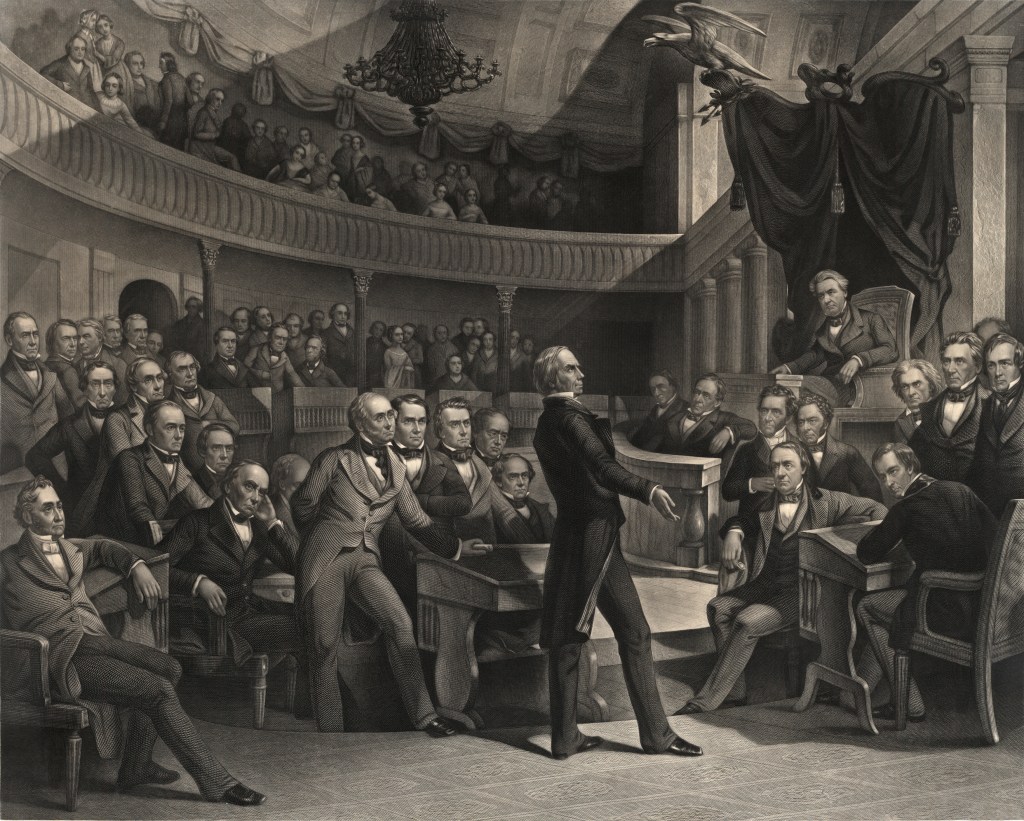
Midway into Jackson’s second term the issue of tariffs was gaining steam in Congress and the debate on it entered the U.S. Senate chamber in January 1830. In a multi-hour speech Senator Robert Hayne of South Carolina accused the North of trying to destroy the South through the policies of high tariffs and increasing opposition to slavery. Old wounds, treated but not healed during the time of the Missouri Compromise, resurfaced, and recriminations again were flying about. Hayne argued that the United States was essentially just a collection of sovereign states that had a right to disobey or “nullify” federal laws they didn’t like. This view was known as the doctrine of nullification. Hayne was considered a surrogate of Vice President John C. Calhoun, also a South Carolinian. The fact that the sitting U.S. Vice President supported this doctrine speaks volumes about how fragile the Union was at the time. Both Northern and Southern politicians were courting the West – the swing region of that era. The South’s overtures towards the West were based on the issue of the federal government owning most of the public lands there. They argued for the ownership of those lands to be transferred to the states. Hayne made an explicit mention of that in his speech. Stopping short of directly advocating for a secession, Hayne flipped the script and accused his colleagues of New England of doing that by recollecting the Hartford Convention of 1814. Senator Daniel Webster of Massachusetts then rose and delivered a thorough rebuke of Mr. Hayne in a speech that lasted nearly two days. He appealed to national unity and stated that a strong national government is a product of the will of the people, attacked the doctrine of nullification and reaffirmed the notion of American nationalism. The most memorable passage that Webster uttered made his speech what many consider the most significant one delivered in the Senate chamber: “While the Union lasts, we have high, exciting, gratifying prospects spread out before us, for us and our children… When my eyes shall be turned to behold, for the last time, the sun in Heaven, may I not see him shining on the broken and dishonored fragments of a once glorious Union; Let their last feeble and lingering glance, rather behold the gorgeous Ensign of the Republic, now known and honored throughout the earth, still full high advanced, its arms and trophies streaming in their original luster, not a stripe erased or polluted, nor a single star obscured—bearing for its motto, no such miserable interrogatory as, what is all this worth? Nor those other words of delusion and folly, liberty first, and union afterwards—but everywhere, spread all over in characters of living light, blazing on all its ample folds, as they float over the sea and over the land, and in every wind under the whole Heavens, that other sentiment, dear to every true American heart—liberty and union, now and forever, one and inseparable!” This speech was widely cited during the Civil War by media, politicians and the military on the Union side.
The Crisis
These eloquent words, while creating many new American patriots, weren’t enough to convince politicians from South Carolina to change their positions. In 1832 the South Carolina legislature executed a series of quick moves to escalate the Nullification Crisis. On November 24th, 1832, it passed the ordinance of nullification and declared the tariffs of 1828 and 1832 “null and void”. On December 10th, Andrew Jackson issued his Nullification Proclamation, which strongly condemned the nullifiers’ actions and essentially declared them illegal and treasonous. Then, on December 13th, Robert Hayne resigned his Senate seat in November and was promptly elected governor by the state legislature. Then, on December 28th, John C. Calhoun resigned as Vice President, and was quickly appointed by the state legislature as the Senator from South Carolina. One of the first actions of the new governor Hayne was to call up roughly 10,000 state militiamen in order to block the ability of federal officers to collect tariffs at South Carolina ports and be ready to defend Charleston in case of federal intervention, which Andrew Jackson threatened. On January 16, 1833, Jackson submitted to Congress a Force Bill which authorized the deployment of U.S. Armed Forces to South Carolina. The situation was critical and military conflict was near certain.
At that time, Henry Clay was coming off his rough loss in the 1832 election. In early 1829, he left the office of the Secretary of State and was practicing law in Kentucky while rebuilding his political base. In 1831 he was elected to the Senate by the Kentucky legislature, so he was back in the Senate after a twenty year absence. His career ambitions were still alive and well. In 1832 he ran for President, using the American System as the staple of his platform. The American System was popular, but only in parts of the country. The central bank and stability of the currency was a big part of the American System. Henry Clay was a strong proponent of The Second Bank of The United States, the central bank at the time. The bank’s charter was to expire in 1836 (it had been chartered in 1816 for 20 years). Andrew Jackson was successful in portraying the bank as an elite corrupt institution. Jackson’s overwhelming national popularity sold the public on the idea, and the bank’s charter was not renewed. This subsequently contributed to the Panic of 1837 and a following long economic recession, which fell on the lap of Jackson’s successor Martin Van Buren. Jackson himself “had left office more popular than when he entered it.” It is fair to say that had Clay been elected instead of Jackson in 1832, many economic troubles that hit the United States during Van Buren’s term might have been avoided or at least reduced in impact, but we’ll go into more details about that in the next post.
Roughly around the beginning of February, 1833, about two weeks after Jackson’s Force Bill was submitted, Henry Clay privately reached out to John C. Calhoun to start negotiating a compromise. Despite the fact that there was no incentive for Calhoun to negotiate, as his position was entrenched since South Carolina had already nullified all the tariffs, he also realized that a compromise legislation was the only way to avoid military confrontation. Clay, on his end, was afraid of the growth of presidential executive power and wanted to act before Jackson would get even more authority. He also wanted to preserve some sort of tariff protectionism and didn’t want to get rid of it completely for the sake of avoiding conflict. As a result, Clay’s final proposal was to bring the tariff rate down in small reductions over the period of nine and a half years, at which point the rates would sharply drop to approximately 1816 levels. Calhoun and his allies in the Senate were eager to avoid a bloody war in their state and thus accepted the compromise. Both Force Bill and the Compromise Tariff Bill were passed by the Congress on the same day, March 1st, 1833. However, the latter effectively made the former moot. Ten days later, on March 11th, the South Carolina legislature repealed the ordinance of nullification.
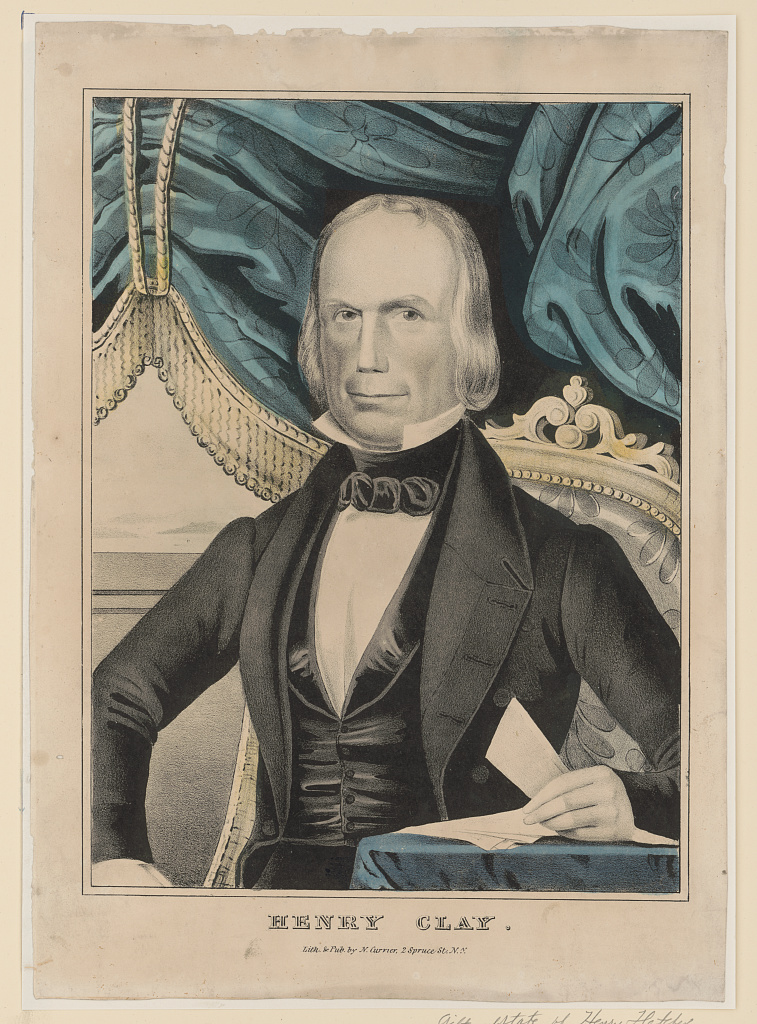 | 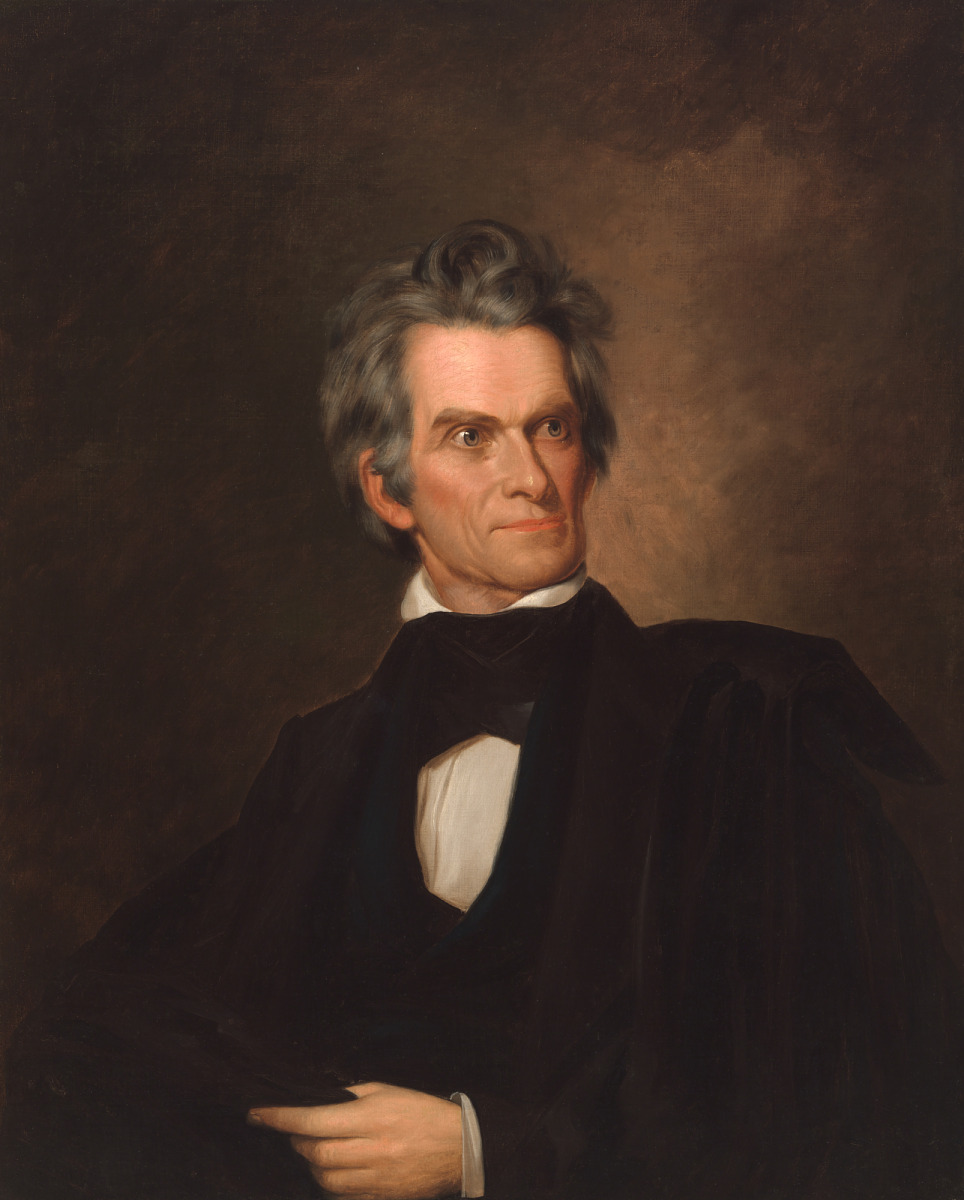 |
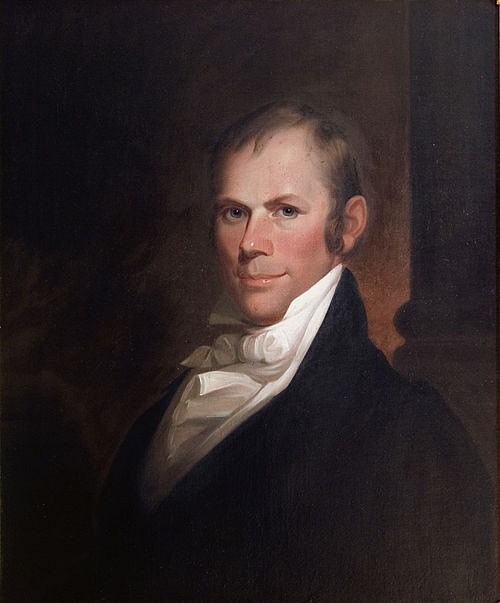
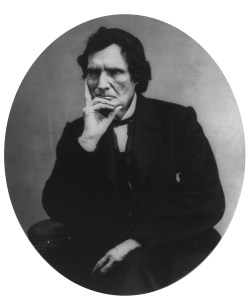
| Henry Clay ca. 1835, https://www.loc.gov/resource/pga.09077/ | John C. Calhoun ca. 1845, National Portrait Gallery, Smithsonian Institution – https://npg.si.edu/object/npg_NPG.90.52 |
The war was avoided through the skillful political maneuvering of Henry Clay. While negotiating the compromise, he was in support of the Force Bill, which earned him a fresh round of accusations of being “two-faced”. However, the Force Bill was an important measure needed for the demonstration of federal authority, so Henry Clay understood that its presence was vital in the process and thus supported it as well. This allowed President Jackson, whose favorite approach was coercion, to also save face in the crisis. In addition, the “two-faced” accusations referenced Clay’s support of 1798 Kentucky and Virginia resolutions early in his career, where he supported nullifying Alien and Sedition Acts in almost identical fashion South Carolina wanted to nullify tariffs 34 years later. While Clay’s views obviously had evolved since then, this disparity in views did not help his image. Despite that, he persevered in his quest for a compromise, which cemented his “great compromiser” reputation on the national stage and made him the intellectual center of the emerging Whig Party. He had more to do for the country, and we’ll go into that next time.